
A new development in crystal growth technology is helping to improve the production of high-performance radiation detectors. Researchers have turned to boron nitride ceramic crucibles for the Bridgman method used to grow cadmium zinc telluride (CZT) crystals. These crucibles offer better thermal stability and chemical resistance than traditional materials.

(Boron Nitride Ceramic Crucibles for Bridgman Growth of Cadmium Zinc Telluride Radiation Detectors)
CZT crystals are key components in advanced radiation detection systems. They are used in medical imaging, national security, and space exploration. Growing high-quality CZT crystals has been a challenge due to reactions between the molten material and standard crucibles. Boron nitride reduces these unwanted interactions. This leads to purer crystals with fewer defects.
The Bridgman growth process involves slowly cooling molten CZT inside a sealed crucible. The shape and surface of the crucible directly affect crystal quality. Boron nitride’s smooth surface and low reactivity help maintain the integrity of the melt. It also withstands the high temperatures needed without breaking down.
Manufacturers report fewer cracks and inclusions in CZT ingots when using boron nitride crucibles. This means more usable material per batch and lower production costs. Labs testing the new approach say detector performance has improved noticeably. Signal clarity and energy resolution are both higher.
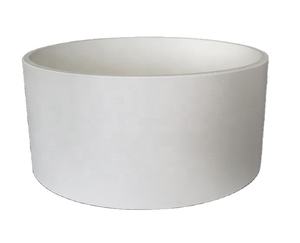
(Boron Nitride Ceramic Crucibles for Bridgman Growth of Cadmium Zinc Telluride Radiation Detectors)
Suppliers are now scaling up production of specialized boron nitride crucibles designed specifically for CZT growth. These custom shapes match the exact needs of Bridgman furnaces. Early adopters include government labs and private firms working on next-generation radiation sensors. The shift marks a practical step forward in making reliable, high-sensitivity detectors more widely available.